For precision CNC parts, a CMM report is often treated as proof that the part is correct. But buyers should not approve a report based only on the presence of numbers. A useful CMM report must reflect the drawing intent, the correct datums, the real critical features, and a clear pass or fail logic. Otherwise, a part can look documented and still be risky in assembly.
Why CMM Reports Matter
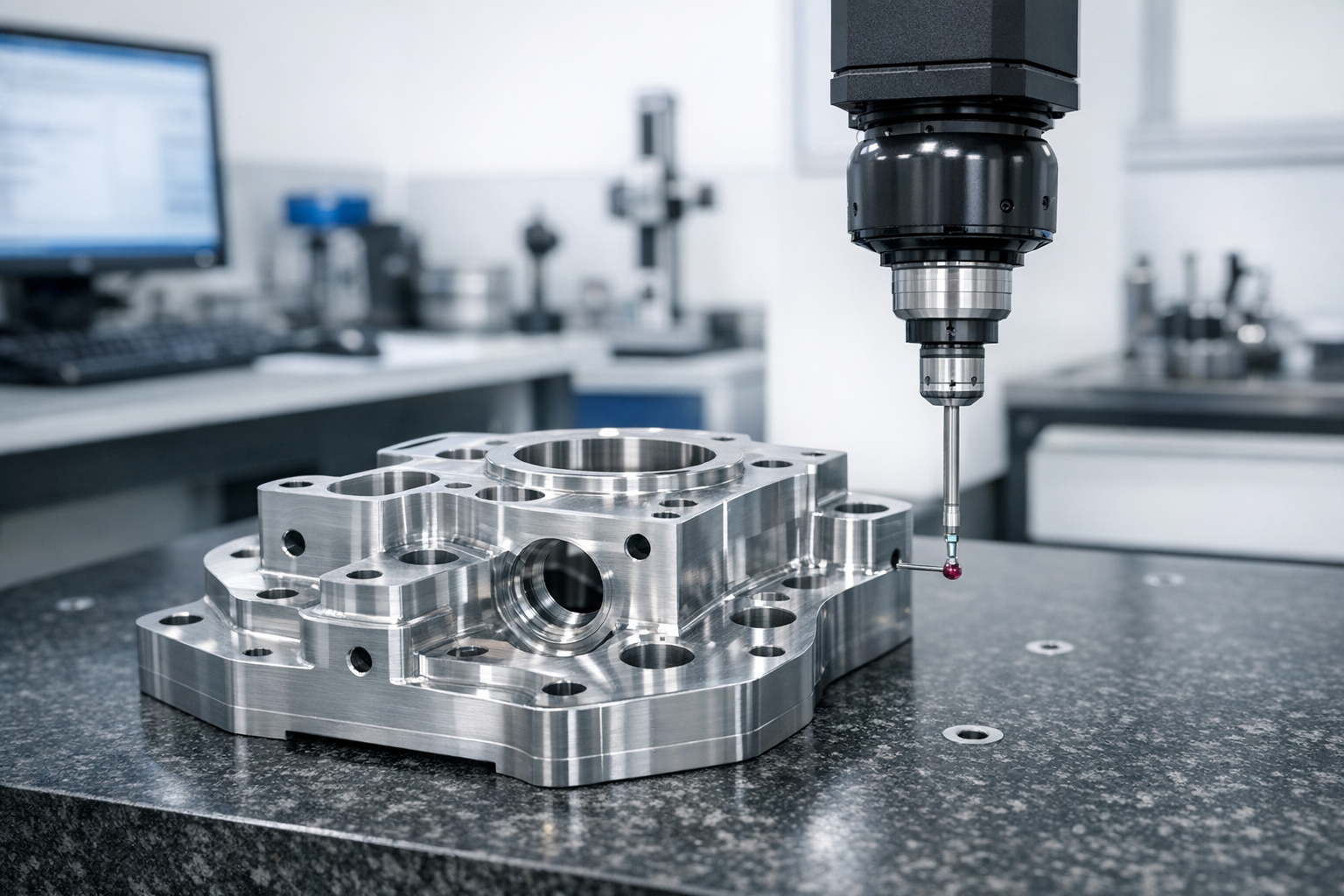
CMM inspection is valuable because it measures complex geometry and feature relationships more reliably than many manual methods. It is especially important for parts with positional tolerances, profiles, angled features, and multi-side datum relationships. For buyers, the report reduces uncertainty only if it is read correctly.
What a Good CMM Report Should Show
- Correct drawing revision matching the approved print
- Clear datum structure when GD&T or positional controls are involved
- Critical dimensions and geometric features instead of only easy measurements
- Actual measured values with allowed tolerance range
- Pass or fail status that is easy to interpret
- Consistent feature naming that matches the drawing
Common Buyer Mistakes When Reviewing a Report
- Checking only whether the report exists, not whether it matches the drawing revision
- Ignoring datum setup on position-controlled features
- Accepting a report that measures non-critical features but skips critical ones
- Assuming a green or pass label means the inspection method was appropriate
- Overlooking whether the part was measured before or after finish/coating
Datum Logic Is Critical
If the drawing uses GD&T, datum selection determines whether the measurement reflects part function. A hole location may pass in a local coordinate check and still fail assembly if the wrong datums were used. Buyers do not need to be full metrology experts, but they should confirm that the supplier measured the part according to the drawing logic, not just according to convenience.
Which Features Deserve the Closest Review?
- Mating bores and hole patterns
- Locating surfaces and datums
- Flatness, perpendicularity, and positional controls
- Sealing faces and interface geometry
- Features tied directly to assembly fit
These are usually more important than general external dimensions.
How CMM Fits Into Overall QC
A CMM report is only one part of the quality system. Material verification, revision control, burr inspection, cosmetic review, and process stability also matter. If the part is quality-sensitive, you should read this article together with our broader CNC quality inspection guide.
When to Ask Follow-Up Questions
- If the report does not mention the drawing revision
- If datum references are missing on geometric controls
- If only partial features are reported on a critical part
- If a measured value is near the limit and repeatability matters
- If finish or coating may have changed final dimensions
Approval should be based on confidence, not only on document format.
Buyer Checklist Before Approval
| Checkpoint | Why it matters |
|---|---|
| Revision matches PO and drawing | Prevents approving the wrong version |
| Critical features included | Confirms functional dimensions were measured |
| Datum logic is clear | Ensures geometry reflects actual assembly condition |
| Tolerance limits are visible | Makes interpretation unambiguous |
| Pass/fail result is clear | Speeds engineering approval |
FAQ
Does every CNC part need a CMM report?
No. CMM reporting is most useful for complex or high-risk geometry where manual measurement is not enough.
Can a CMM report still be misleading?
Yes. If the wrong datums, features, or revision are used, the report may look professional but fail to prove functional compliance.
What should I prioritize first when reviewing a report?
Start with drawing revision, critical features, datum setup, and pass or fail status on the highest-risk dimensions.
Should prototype parts use the same reporting standard as production parts?
Not always. The reporting level should match the purpose of the prototype and the risk of the application.
Related CNC Resources
- CNC Quality Inspection Guide
- How to Read a CNC Inspection Report
- CNC Machining Tolerances Guide
- How to Choose a CNC Machining Supplier
Need Help Reviewing a CNC QC Report?
Jingou CNC can support buyers who need clearer inspection planning, better measurement reporting, or a more practical approval process for custom parts. To discuss your drawing or inspection needs, visit our contact page.