CNC prototyping is often the fastest path from CAD model to functional hardware, but many projects still lose time because drawings are incomplete, tolerances are unrealistic, or sample approval expectations are not defined upfront. A structured prototyping checklist helps teams move faster while reducing avoidable engineering back-and-forth.
Why Prototyping Delays Happen
Most prototype delays are not caused by machining alone. They usually come from unclear RFQs, missing information, revision confusion, finish questions, or changes after machining has already started. A prototype is not just a part. It is also a decision tool for design validation, assembly testing, and supplier communication.
Core CNC Prototyping Checklist
- Confirm the latest CAD and drawing revision. Make sure the supplier has the exact files you want built.
- Mark critical dimensions clearly. Separate function-critical features from general dimensions.
- Review tolerance realism. Avoid applying high-precision tolerances to every feature by default.
- Define material intentionally. Pick the prototype material based on what you are testing: form, fit, strength, or final finish.
- Specify surface finish only where needed. Cosmetic expectations should be stated separately.
- State quantity and urgency. Prototype quantity affects fixture choices and process planning.
- Clarify whether the part is for fit check or functional validation. That changes process priorities.
- Define inspection expectations. First samples may need more detailed reporting than later iterations.
- Ask for DFM feedback before cutting. Early comments can save a full prototype cycle.
- Plan the next decision after sample arrival. Know what makes the prototype approved, revised, or rejected.
Material Choice for Prototype Parts
Prototype material should match the purpose of the build. If the goal is simple geometry confirmation, a low-risk material may be enough. If the goal is functional validation, final-production material may be necessary. For example, 6061 aluminum may be perfect for rapid iteration, while 7075 or stainless steel is better when the real mechanical behavior must be tested.
Drawing Quality Makes or Breaks Prototype Speed
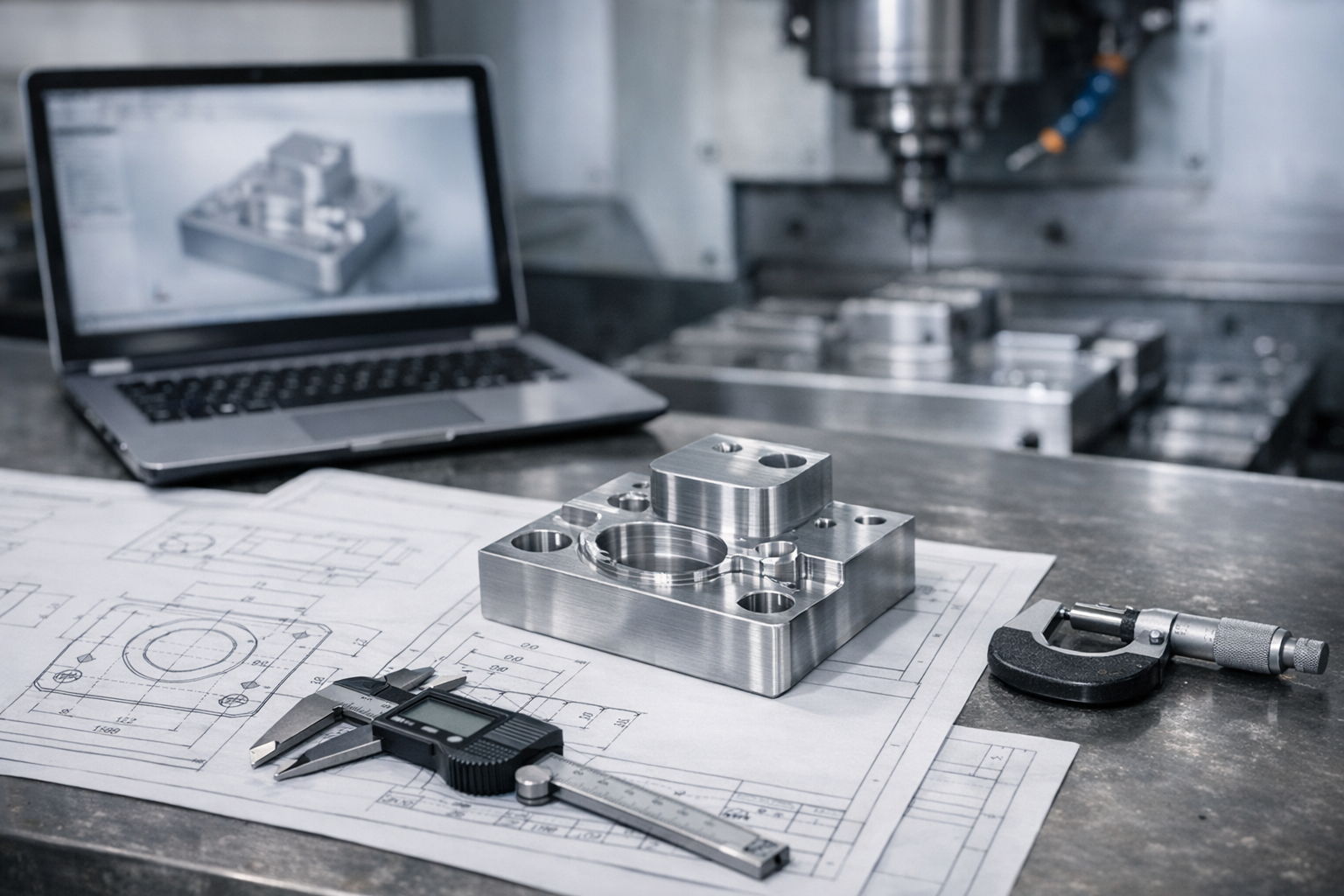
A strong prototype package should include 3D CAD, 2D drawing, thread notes, finish callouts, critical datums, and any special assembly context. Missing notes cause assumptions, and assumptions create rework. If you are unsure how tight your dimensions should be, review our CNC tolerance guide.
How to Use the First Prototype Effectively
- Check fit before cosmetic details if fit is the main project risk
- Record all findings by revision number
- Separate design mistakes from manufacturing mistakes
- Give consolidated feedback instead of fragmented updates
- Decide whether the next step is revision, material change, or release to pilot production
When to Ask for More Inspection
Some prototype parts need only basic dimensional verification. Others need full reporting on critical holes, datums, and mating relationships. If you are building a high-risk assembly, consider pairing the prototype with a measurement plan. Our inspection report guide can help your team review the results faster.
Prototype Cost vs Production Cost
Prototype cost is usually higher per part because setup time is spread over fewer pieces. That does not mean the supplier is expensive. What matters is whether the prototype cycle reduces risk before larger production quantities. Good prototype planning often saves more money downstream than it costs upfront.
For design-side savings, see our DFM for CNC machining article.
FAQ
Should a CNC prototype use the final production material?
Only if the purpose of the prototype requires realistic strength, weight, or finish behavior. For simple fit checks, another material may be enough.
What is the biggest reason prototype cycles slip?
Incomplete drawings and unclear approval criteria are two of the most common causes.
Do prototypes need full CMM reports?
Not always. Reporting should match the project risk and the importance of critical features.
How can I speed up prototype approval?
Define critical checks before the sample arrives and consolidate feedback by revision instead of sending scattered comments.
Related CNC Resources
- DFM for CNC Machining
- CNC Machining Tolerances Guide
- How to Choose a CNC Machining Supplier
- 5-Axis CNC Machining Guide
Need a Faster Prototype Review Process?
Jingou CNC can review your CAD files before machining, suggest DFM improvements, and help structure prototype inspection around the most important risks. To discuss your project, visit our contact page.