Choosing a CNC machining supplier is not only about comparing quoted price. The right supplier reduces risk across quality, lead time, engineering communication, and long-term repeatability. The wrong supplier may look cheap at RFQ stage but become expensive through delays, rework, unclear inspection, or unstable production.
Why Supplier Selection Matters Before Quotation
Many buyers send the same drawing to several factories and compare the lowest number. That is understandable, but price alone does not reveal whether the supplier truly understands your part, can control the tolerance, or has the right process for the geometry. A strong RFQ response should show technical understanding, not just a fast number.
10 Checks Before You Send the Order
- Verify real process capability. Ask whether the supplier is best at milling, turning, 5-axis, or mixed work, and whether your part fits that strength.
- Check material experience. A supplier who machines aluminum every day may not be equally strong on stainless, titanium, or engineering plastics.
- Review tolerance understanding. They should question unclear or excessive tolerance calls instead of blindly accepting everything.
- Confirm inspection method. Make sure they can support caliper, gauge, bore measurement, or CMM inspection depending on the part risk.
- Look at DFM feedback quality. Good suppliers identify cost or manufacturability issues early.
- Evaluate communication speed and clarity. Delayed or vague answers during quotation usually become worse after PO.
- Ask about lead time stability. Not just quoted lead time, but how they manage schedule when capacity shifts.
- Check revision control. A reliable supplier will confirm drawing version, material grade, finish, and special notes clearly.
- Understand sample and first article flow. This matters for new parts and repeat production approval.
- Review export and packaging experience. Especially important for overseas buyers who need stable labeling, packing, and shipment handling.
Capability Is More Important Than Equipment Lists
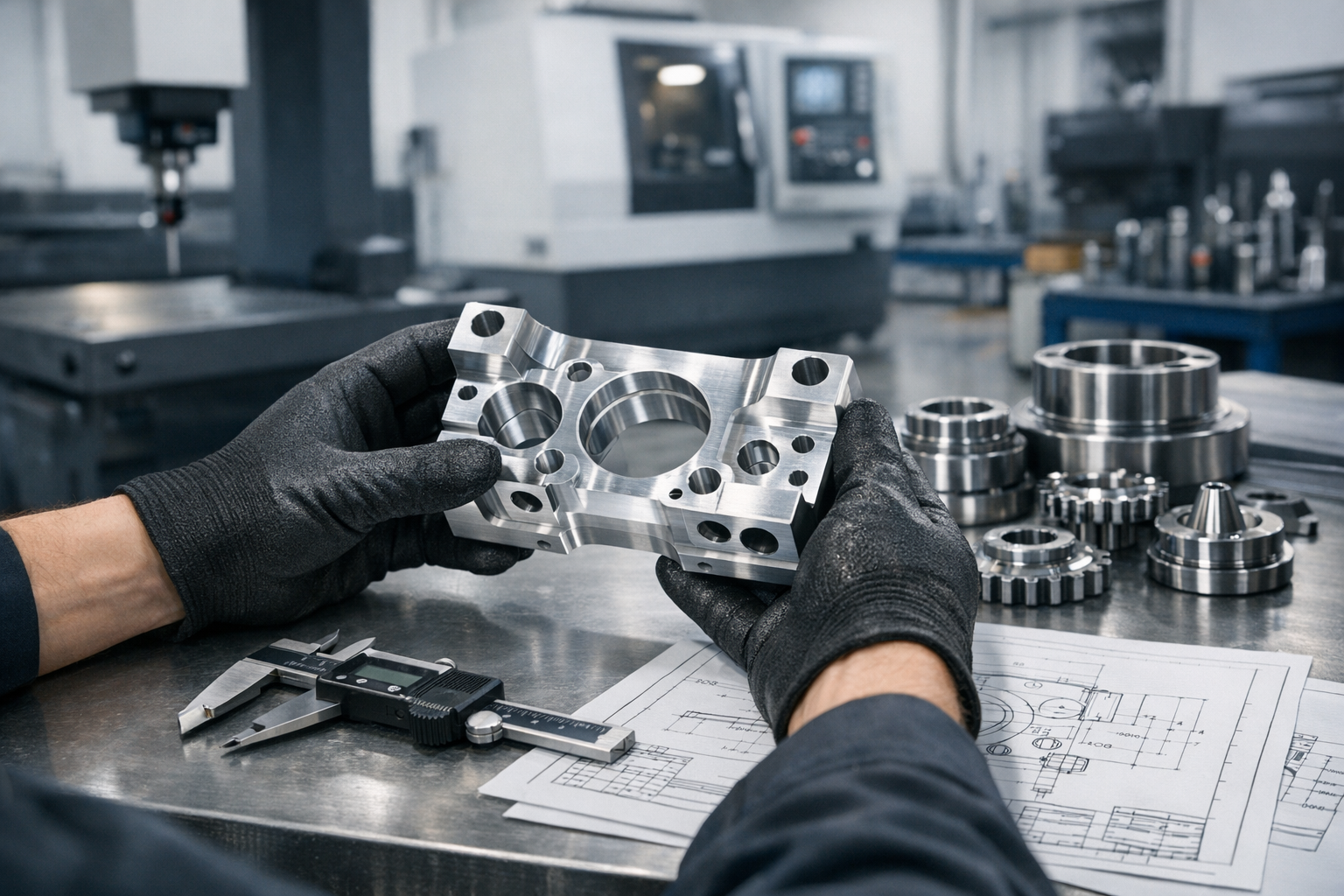
Many factories can show modern CNC machines, but equipment alone does not guarantee good results. What matters is whether the team knows how to fixture your part, control distortion, inspect critical features, and respond when a tolerance is risky. Buyers should ask for relevant examples, not only machine photos.
Questions to Ask During RFQ
- Which features on this part do you consider highest risk?
- Would you machine this in one setup or multiple setups?
- Do you recommend any DFM changes to reduce cost or lead time?
- Which dimensions would you inspect 100%?
- What is your recommended material or finish if performance and cost both matter?
Suppliers who answer these questions clearly are usually easier to work with during production.
How to Read Warning Signs Early
- Very low quote without technical questions
- No mention of inspection or tolerance risk
- Unclear lead time assumptions
- Weak English communication on technical details
- No structured response to revision changes
These signs do not always mean the supplier is bad, but they do raise execution risk.
Quality Control Should Match Part Risk
Not every part needs full CMM reporting, but every serious supplier should be able to explain how critical features will be checked. If your project includes datums, positional tolerances, or high-risk fits, review our CNC quality inspection guide and our CMM report checklist.
Cost Comparison Should Include Total Risk
A quote should be compared across more than unit price. Buyers should also weigh engineering support, tolerance confidence, batch stability, inspection quality, and responsiveness. A slightly higher-priced supplier often wins on total project cost if they reduce delay, scrap, and rework.
For a broader pricing framework, see our guide to reducing CNC machining costs.
FAQ
What is the biggest mistake when choosing a CNC machining supplier?
Choosing only by price without checking technical capability, communication quality, and inspection strength.
Should I ask for samples before production?
Yes, especially for new parts, tight-tolerance components, or higher-volume repeat orders where first article approval matters.
How can I compare two similar suppliers?
Compare how they discuss process risk, inspection, and DFM, not just the final quote number.
Does export experience matter for CNC parts?
Absolutely. Packaging, labeling, documentation, and response speed are part of supplier reliability for overseas buyers.
Related CNC Resources
- How to Reduce CNC Machining Costs
- CNC Quality Inspection Guide
- CNC Prototyping Checklist
- How to Read a CNC Inspection Report
Need a Technical Review Before RFQ?
Jingou CNC can review your drawings before quotation and suggest the most practical approach for material, process, tolerance, and inspection planning. To discuss your project, visit our contact page.